

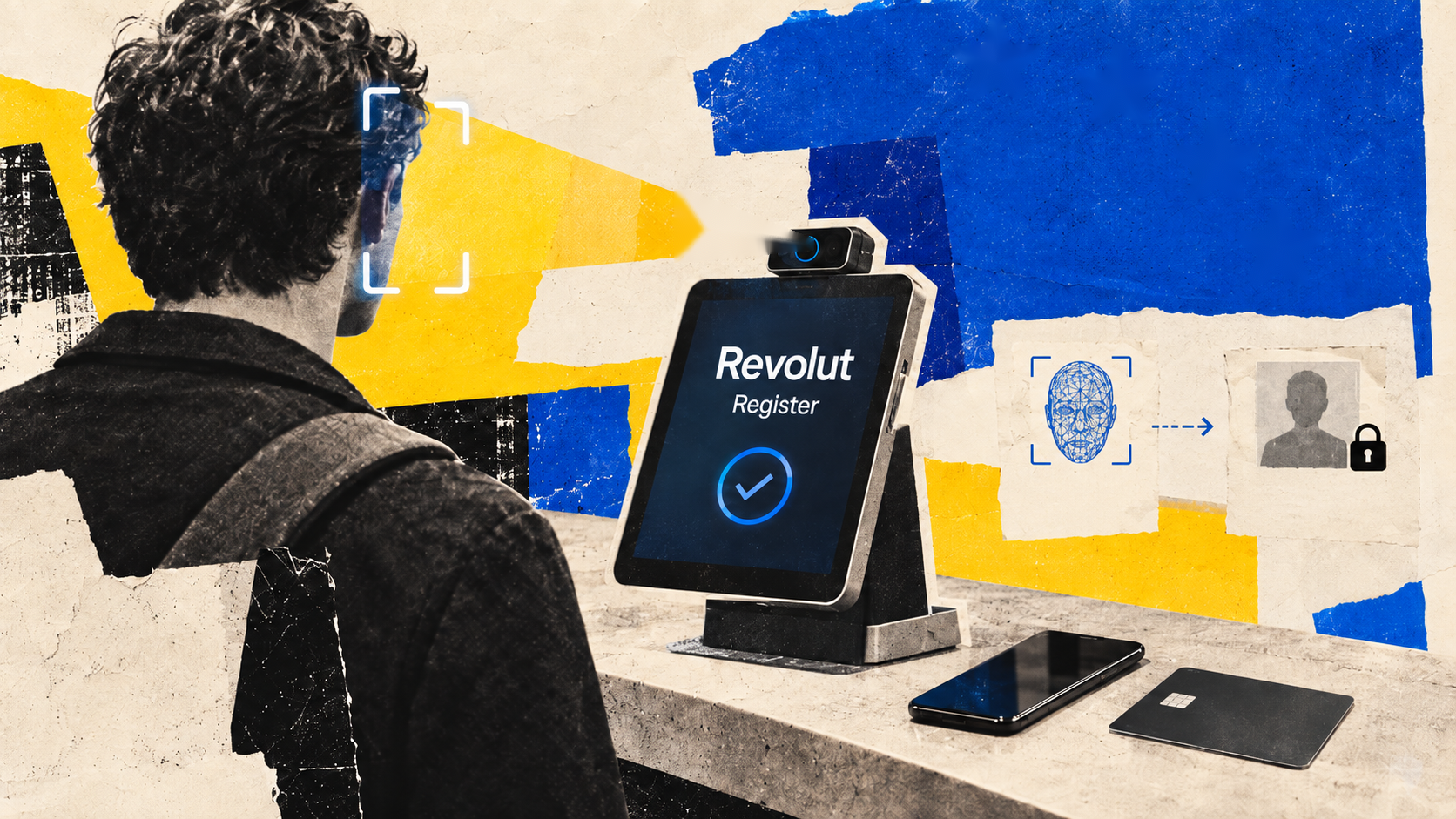
Revolut has begun testing a payment system that lets customers complete an in-store purchase simply by looking at a checkout camera, removing the need to present a bank card or smartphone once the service has been set up.
Called Pay with Smile, the feature was piloted from September 24 to 26 at three Kiss the Hippo cafés in London’s Bloomsbury, Soho and Chelsea districts. It runs through Revolut Register, the company’s new point-of-sale system for merchants. For now, this is a limited UK experiment rather than a general Revolut rollout.
Customers must actively enrol through the Revolut app and consent to biometric processing. At checkout, the terminal photographs the customer’s face and converts it into encrypted, single-use numerical data. Revolut then uses facial recognition and liveness checks to confirm that the person is the account holder and not, for example, someone presenting a photograph or video. A successful match authorises the payment directly through Revolut Pay.
The system therefore removes the card from the checkout interaction, but it does not signal the imminent disappearance of bank cards. Users must already have a Revolut payment account. A failed facial match simply returns them to conventional options such as a physical card, phone wallet or in-app Revolut Pay.
Privacy is the more consequential part of the experiment. Revolut says merchants never store customers’ personal information. The numerical facial data generated for each transaction is deleted immediately after the identity check. However, Revolut keeps a copy of the original checkout photograph under its data-retention policies for fraud investigations and payment disputes. Users can withdraw consent and have their biometric template deleted.
For merchants, Revolut is also using Pay with Smile as a way to promote Register. Transactions made through the facial-payment system currently carry 0% processing fees.