

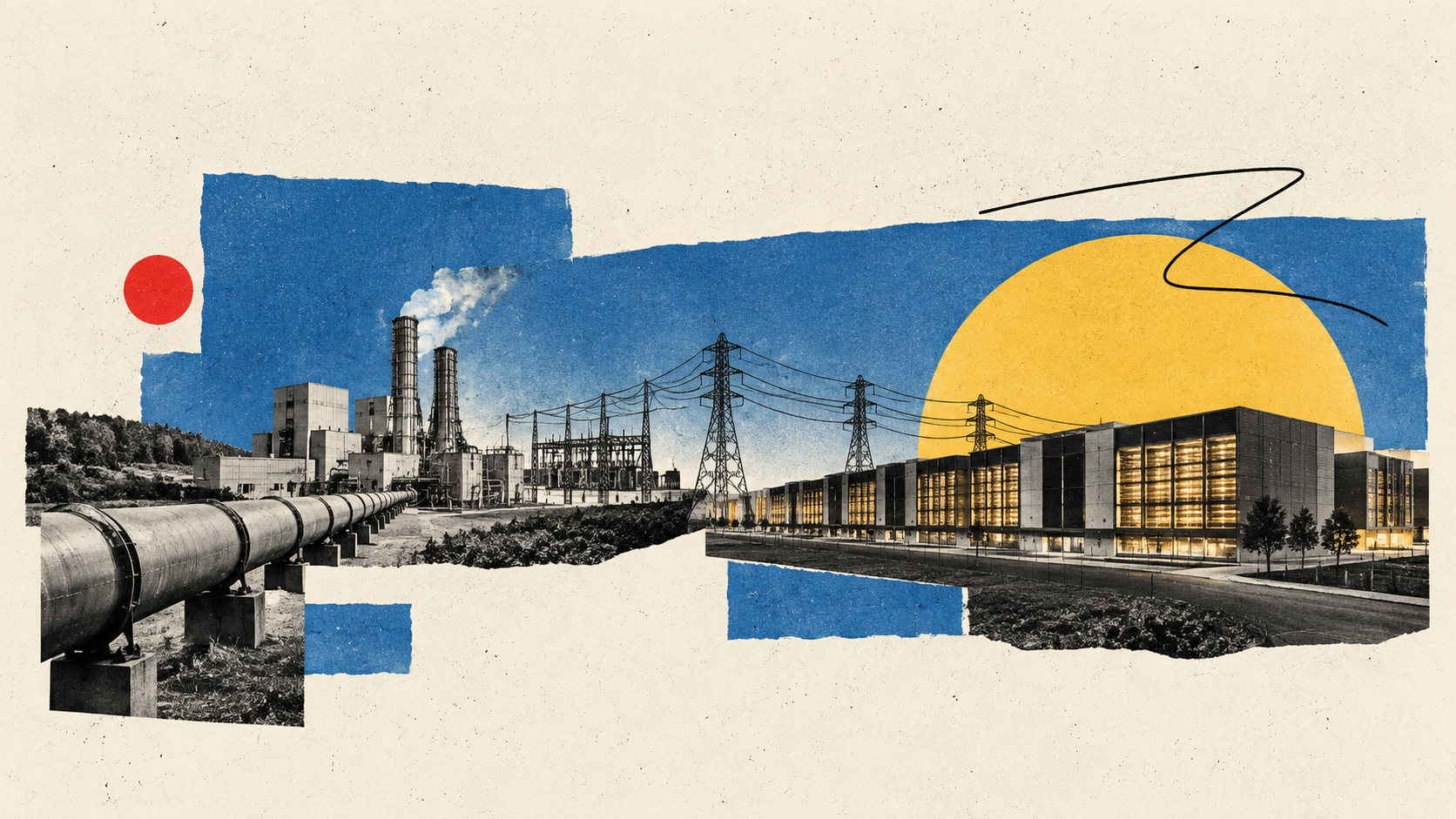
US data centers could drive an additional 15 billion cubic feet per day of natural gas consumption for electricity generation by 2035, according to Bloomberg, underscoring how the AI infrastructure boom is reshaping America’s energy system. That volume alone would exceed the current total gas consumption of every country except the United States, China, Russia and Iran.
The projection is more than twice BloombergNEF’s previous estimate of 6.9 billion cubic feet per day. The forecast does not mean data centers will necessarily burn all that gas on-site. It includes natural gas consumed by power plants supplying electricity to computing facilities through the grid, alongside dedicated generation built near data centers.
BloombergNEF expects natural gas to provide 69% of the electricity needed by new grid-connected US data centers. Gas is attractive because US supplies are abundant and gas-fired plants can provide continuous, dispatchable electricity while adjusting output more easily than many other generating technologies.
The forecast would push total US power-sector gas demand to about 54 billion cubic feet per day by 2035, an increase of 18 billion from 2025. New liquefied natural gas export terminals are expected to create another major source of demand, increasing competition for US production.
The estimates remain highly uncertain. BloombergNEF analyst Henry Eaton cautioned that the forecast has large potential errors in either direction as data-center projects can be delayed, cancelled or supplied by different energy technologies. Federal projections nevertheless reinforce the broader trend: the US Energy Information Administration says data centers have become a major driver of renewed electricity-demand growth.