

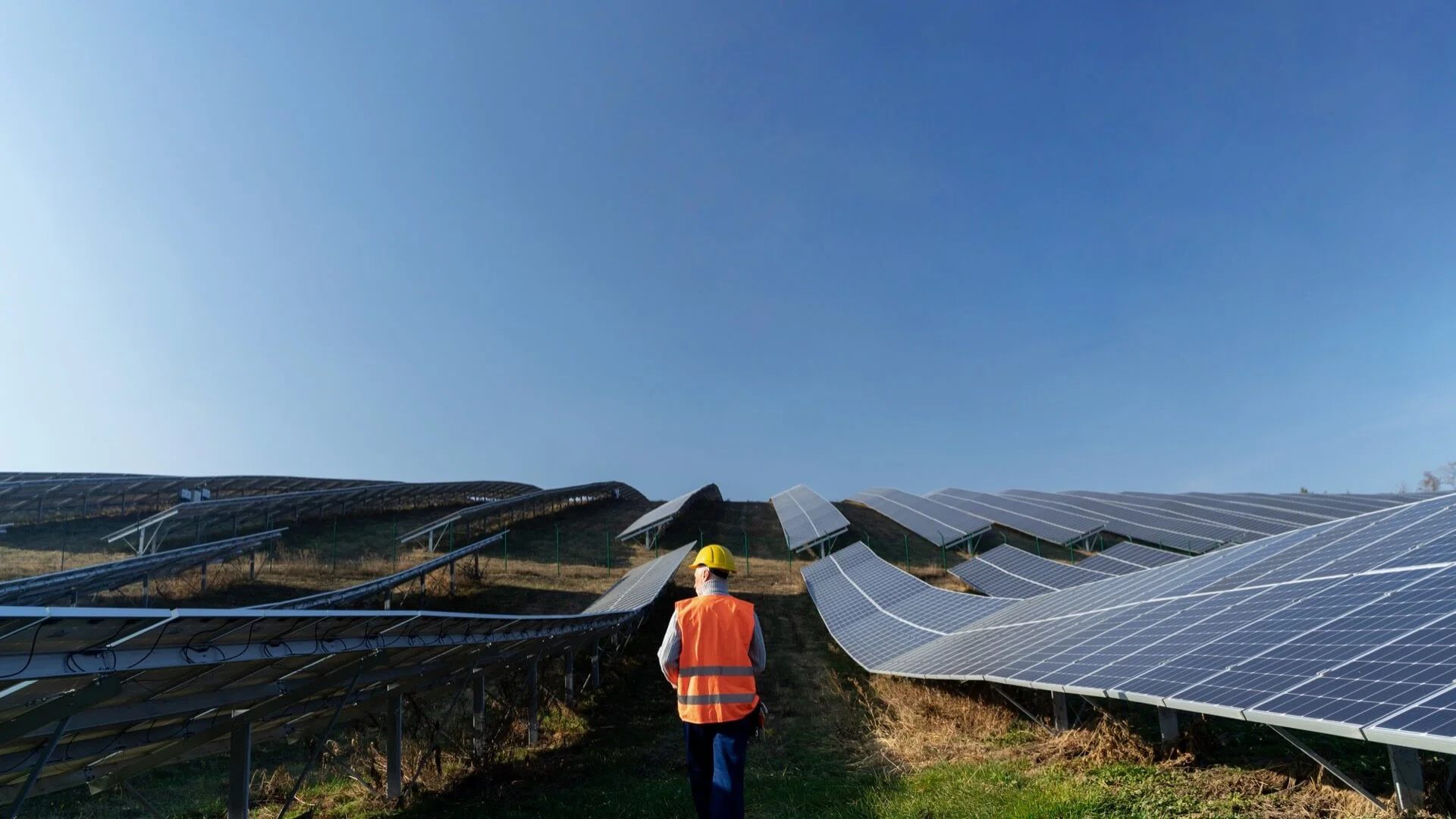
The cost of solar technology has collapsed to levels that would have seemed almost impossible a generation ago, just as the world is installing renewable power at a record pace. Yet new figures show that even today’s boom is not fast enough to meet the global target for 2030 — particularly as electricity demand from AI, data centers and electrification accelerates.
Solar panels themselves now sell for roughly 12 cents per watt of generation capacity, according to Ember co-founder Dave Jones. Around 26 years ago, the figure was closer to $5 to $6 per watt. Much of that decline has been driven by enormous increases in Chinese manufacturing.
That does not mean a complete solar installation costs 12 cents per watt: land, labour, inverters, grid connections and financing add substantially to the final price. But the economics of producing electricity have nevertheless shifted dramatically. IRENA estimates that utility-scale solar generated power at an average cost of about $44 per megawatt-hour in 2025, while more than 90% of new large renewable projects produced electricity more cheaply than the cheapest new fossil-fuel alternative available in their market.
Deployment is following those economics. The world added a record 693 gigawatts of renewable capacity in 2025, lifting the global total to about 5.15 terawatts. The problem is scale.
Countries agreed at COP28 to roughly triple global renewable capacity to 11.2 TW by 2030. To get there, annual additions now need to rise to around 1.2 TW between 2026 and 2030, almost twice the record amount installed last year. In practice, the world must build more renewable capacity over the next five years than it had accumulated in total by the end of 2025.
Electricity demand is also rising. AI data centers are becoming a significant new load on power grids, alongside electric vehicles, cooling and industrial electrification. If clean generation and grids cannot expand quickly enough, some of that demand could prolong the use of coal and gas.
The renewable transition is therefore increasingly constrained not by the price of solar panels themselves, but by everything around them: electricity grids, storage, permitting and financing. Solar has largely won the cost argument. The harder challenge is now building enough of it — and connecting it quickly enough — to keep pace with a rapidly electrifying economy.